

This article is based on an in-person technical interview conducted with engineers from TÜV NORD during SNEC 2026 on June 4, 2026.
The discussion was recorded on-site and transcribed for clarity. It covers key topics including solar mounting system certification standards, testing procedures, composite material evaluation, solar tracker requirements, and project bankability.
As global photovoltaic markets continue to expand, solar mounting system certification is increasingly used as a technical reference for quality assurance, risk evaluation, and international project procurement.
Table of Contents
- Why Solar Mounting System Certification Matters
- Which Solar Mounting Systems Require Certification
- Certification Standards: P33.3-AA-01, IEC 62817, MCS 012
- Composite vs Metal Mounting System Testing Requirements
- Flexible Mounting System Testing and Wind Tunnel Evaluation
- Can Accelerated Testing Simulate 25 Years of Service Life?
- TÜV NORD vs CE vs IEC vs UL
- Certification Process and Timeline
- Documentation Requirements and Common Challenges
- Certification and Project Bankability
- Regional Certification Requirements (EU, Middle East, Asia, Africa)
- Why EPC Companies Prefer Certified Mounting Systems
- Future Trends in Solar Mounting System Standards
- FAQ
1. Why Solar Mounting System Certification Matters
Unlike photovoltaic modules, there is currently no single global mandatory certification standard for solar mounting structures.
However, third-party certification plays an increasingly important role in:
- Structural reliability verification
- Environmental durability assessment
- Manufacturing consistency validation
- Risk evaluation for project financing
- Procurement qualification in EPC tenders
In many utility-scale solar projects, certification is not a legal requirement, but it is often requested by project developers, EPC contractors, insurers, and financial institutions as part of technical due diligence.
In practice, certification is becoming a “market-driven requirement” rather than a regulatory one.
2. Which Solar Mounting Systems Require Certification?
Solar mounting system certification is commonly requested for:
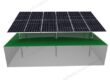
- Ground-mounted solar systems
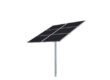
- Solar tracking systems
- Solar carport structures
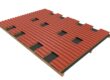
- Rooftop solar mounting systems
- BIPV support structures
The required certification scope depends on:
- Project scale
- Target market regulations
- Financing structure
- Customer or EPC requirements
3. Certification Standards Used in Solar Mounting Systems
3.1 Fixed Ground-Mounted Systems
According to TÜV NORD engineers, fixed mounting systems are commonly evaluated under:
P33.3-AA-01 (TÜV NORD internal standard)
This framework assesses:
- Mechanical strength
- Material performance
- Environmental durability
- Structural reliability
- Long-term stability
Testing typically includes:
- UV exposure
- Damp heat testing
- Thermal cycling
- Humidity-freeze cycles
- Salt spray corrosion testing
3.2 Solar Tracking Systems
Solar trackers are primarily evaluated under:
IEC 62817
This international standard covers:
- Functional testing (tracking accuracy, control performance)
- Mechanical cycling tests
- Environmental durability assessment
- Component-level reliability (TCU, slewing drives)
Trackers typically require:
- Laboratory samples
- On-site full-row system testing
Mechanical cycling may reach approximately 3,650 operation cycles, depending on test configuration.
3.3 Rooftop Solar Systems
For the UK market, rooftop mounting systems commonly comply with:
MCS 012
This applies to:
- Above-roof mounting systems
- Roof-integrated PV structures
Compliance is often required for market acceptance in residential and commercial rooftop projects.
4. Composite vs Metal Mounting Systems
As composite materials are increasingly adopted in solar mounting structures, certification requirements have become more specialized.
4.1 Metal Mounting Systems
Traditional metal structures are typically tested for:
- Damp heat resistance
- UV aging
- Thermal cycling
- Humidity-freeze resistance
- Salt spray corrosion
These tests are similar in methodology to photovoltaic module reliability testing.
4.2 Composite Mounting Systems
Composite structures require additional evaluation, including:
- Water resistance testing
- Alkali resistance testing
- UV + dry-condensation cycling
- Freeze-thaw cycling
- Flammability testing
- Glow wire testing
A key engineering concern is mechanical strength degradation after long-term environmental exposure, particularly under water and alkaline conditions.
5. Flexible Mounting Systems and Wind Load Testing
Flexible mounting systems generally follow similar test frameworks as fixed systems.
However, a critical additional requirement is:
Wind Tunnel Testing
Wind tunnel testing evaluates:
- Dynamic wind loading behavior
- Structural resonance effects
- Vibration performance under lateral wind loads
This is particularly important because wind-induced vibration has been identified as a real failure risk in flexible mounting and tracking systems.
6. Can Certification Testing Simulate 25 Years of Service Life?
A common misconception is that accelerated testing directly equals a defined number of service years.
According to TÜV NORD engineers, accelerated testing provides an indication of long-term durability, but does not directly translate into exact service life.
Examples include:
UV Exposure Testing
- Approximately 1,700 kWh/m² cumulative UV exposure
- Used as a reference for long-term outdoor conditions in certain climates
Damp Heat Testing
- 85°C / 85% RH
- 6,000–7,000 hours duration
Used to evaluate long-term material stability in temperate climates.
There is no universal formula that converts accelerated test duration into actual field service life.
7. TÜV NORD vs CE vs IEC vs UL
These standards and certifications are often confused but serve different purposes:
TÜV NORD Certification
- Third-party performance and reliability assessment
- Voluntary certification
- Used for quality verification and bankability support
CE Marking
- Regulatory compliance requirement for European market
- Mandatory for product entry into EU
IEC Standards
- International technical standards
- Provide testing frameworks but are not certifications
UL Standards
- Safety standards primarily used in North America
These systems are not interchangeable. The appropriate combination depends on target market requirements.
8. Certification Process and Timeline
The certification process typically includes:
- Application submission
- Standard selection
- Contract signing
- Sample preparation
- Laboratory testing
- On-site testing (if required)
- Factory inspection
- Documentation review
- Certification decision
Typical Timeline
- Fixed mounting systems: ~3 months
- Solar trackers: up to 4.5 months
Longer tracker timelines are mainly due to mechanical cycling test requirements.
9. Documentation Requirements and Common Challenges
Manufacturers typically need to provide:
- Engineering drawings
- Installation manuals
- Material specifications
- Structural calculation reports
- Product data forms
Common Challenges
One frequent issue during certification is:
- Insufficient incoming material inspection records
- Lack of quantitative quality control documentation
- Material degradation in composite water/alkali tests
Pre-assessment before certification submission is strongly recommended.
10. Certification and Project Bankability
Certification plays an important role in financial evaluation processes.
Banks, insurers, and investors often use certification reports as:
- Technical risk references
- Due diligence supporting documents
- Reliability verification tools
In some cases, dedicated bankability reports may be requested before project financing approval.
Certification may help support financing discussions, but does not guarantee funding outcomes.
Certified mounting structures such as solar carport systems and ground mounting systems are widely used in internationally financed solar projects.
11. Regional Certification Requirements
Europe
Third-party certification is widely preferred in procurement processes and used for supplier qualification.
Middle East
Large utility-scale projects emphasize bankability and long-term risk control.
Southeast Asia
Rapid solar expansion increases demand for verified product performance.
Africa
Many internationally financed projects require technical due diligence documentation.
12. Why EPC Companies Prefer Certified Systems
EPC contractors typically prefer certified mounting systems because they help:
- Reduce engineering uncertainty
- Support project approval processes
- Improve insurance assessment outcomes
- Increase investor confidence
- Simplify procurement evaluation
13. Future Trends in Solar Mounting Standards
Growth of Composite Structures
Composite materials are increasingly adopted due to:
- Corrosion resistance
- Lightweight design
- High strength-to-weight ratio
Emerging Standards
While IEC 62817 remains the primary tracker standard, IEC 63513 is under development and focuses on personnel protection in solar tracker systems.
Frequently Asked Questions
What is solar mounting system certification?
It is a third-party evaluation of structural reliability, durability, and performance under laboratory and field testing conditions.
Is certification mandatory?
No. Most certifications are voluntary, but often required in procurement and financing processes.
How long does certification take?
Typically 3 to 4.5 months depending on system type.
What is IEC 62817?
It is the main international standard for evaluating solar tracker performance and safety.
Does certification improve bankability?
It is often used as a technical reference in financing and risk assessment processes.
Final Note
Solar mounting system certification is becoming an essential part of global solar project development, particularly for manufacturers targeting international EPC markets.
As solar projects scale up and financing requirements become more stringent, third-party certification is increasingly viewed as a key component of product credibility, risk management, and market access.