
For installers and building owners, the decision to go solar on a standing seam metal roof often comes with a critical concern: how to secure the array without puncturing the roof membrane. Traditional penetrating mounts risk voiding warranties and causing costly leaks. The solution lies in non-penetrating standing seam roof clamps, which use mechanical compression to grip the raised seams. But how do these clamps ensure structural safety without a single hole? The answer is found in a combination of precision engineering for wind uplift resistance and a material strategy that prevents galvanic corrosion over the system’s 25-year lifespan.
The Engineering Behind Non-Penetrating Security
Unlike asphalt shingle or tile roofs, standing seam metal roofs present a unique opportunity for zero-penetration mounting. The vertical seams are the strongest part of the roof profile, designed to handle thermal expansion and structural loads.
Material Compatibility is Critical
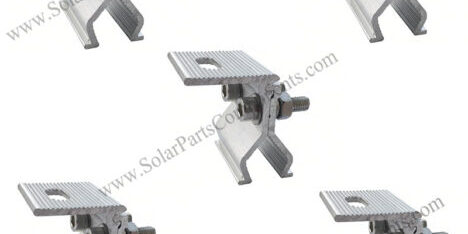
The longevity of a solar installation on a metal roof hinges on preventing galvanic corrosion. When dissimilar metals are in contact in the presence of an electrolyte (like rainwater), they can corrode rapidly. High-quality standing seam roof clamps are crafted from aluminum alloy (typically 6005-T5 or 6063-T5). This is intentionally chosen to be chemically compatible with the aluminum or galvalume panels of the roof itself. The fasteners—usually SUS304 stainless steel—are selected for their high tensile strength and resistance to rust, ensuring the clamping force remains consistent for decades without seizing or degrading.
Wind Uplift Resistance Through Design
The primary structural challenge on a metal roof is not gravity, but uplift. High winds flowing over the panels can create tremendous suction forces. Standing seam clamps are engineered to counteract this through a large contact area with the seam. The clamping force is distributed evenly, preventing point loads that could deform the thin metal of the roof panel. For projects in high-wind zones, engineering calculations often dictate a tighter clamp spacing along the seam, particularly at the corners and edges of the array where wind pressures are highest.
Preserving Roof Warranty and Integrity
One of the biggest advantages of a clamp-based system is the preservation of the roof manufacturer’s warranty. Drilling holes through a standing seam roof can void this warranty immediately. Since non-penetrating clamps attach directly to the seam without breaching the roof plane, they leave the roof’s waterproofing integrity intact. This is a major consideration for commercial buildings where the roof warranty is a significant asset.
Key Advantages for Residential and Commercial Installations
Choosing the right clamp system impacts not just the installation day, but the entire lifecycle of the solar array.
-
Zero Leak Risk: By eliminating penetrations, you eliminate the primary failure point for roof leaks. There is no need for sealants, flashing, or periodic re-caulking, drastically reducing long-term maintenance costs.
-
Faster, Safer Installation: Installers can slide the clamps onto the seams and torque them down without the time-consuming process of drilling, sealing, and flashing each penetration. This reduces labor time and the risk of human error in sealing applications.
-
Reversible and Adaptable: If the solar array needs to be relocated or the roof needs servicing, the clamps can be simply unbolted and removed, leaving the roof in its original condition. This flexibility is invaluable for tenants or buildings undergoing future renovations.
Installation Best Practices for Maximum Performance
Even the best clamp can fail if installed incorrectly. Following a rigorous process is key to a secure installation.
-
Profile Verification: Not all standing seams are created equal. Before ordering, verify the exact profile (snap-lock, mechanical seam, etc.), seam height, and seam width. Using a clamp designed for the wrong profile can lead to inadequate grip or damage to the seam.
-
Torque Control: This is the most critical step. Under-torquing can lead to slippage under wind load; over-torquing can deform the roof seam, compromising its structural integrity and weathertightness. Always use a calibrated torque wrench and follow the clamp manufacturer’s specifications exactly (typically in the range of 160-180 in-lbs for set-screw types).
-
Purlins Matter: While the clamp grips the seam, the seam must transfer the load to the structure beneath. Ensure that clamps are positioned directly above roof purlins or rafters. A clamp placed in the middle of a span between purlins can cause the roof panel to buckle under load.
Where Non-Penetrating Clamps Deliver the Most Value
This technology is ideal for specific scenarios where roof integrity is paramount.
-
New Metal Roofs: For new construction or roof replacements, using clamps from day one ensures the roof warranty remains fully intact while adding solar generation.
-
Commercial & Industrial Buildings: Large, flat-roofed warehouses with standing seam roofs are perfect candidates, as they offer vast, uninterrupted space for solar arrays that can be installed without risking leaks over sensitive inventory.
-
High-Wind and Coastal Regions: The combination of corrosion-resistant materials and robust mechanical grip makes these clamps ideal for harsh environments where durability is non-negotiable.
Conclusion: A Smarter Way to Mount on Metal
The standing seam roof clamp represents a superior mounting methodology for metal roofs. By solving the core challenges of waterproofing and corrosion through intelligent design and material science, it provides a safer, more durable, and more reliable foundation for solar energy systems. For any project where protecting the roof asset is as important as generating clean energy, a non-penetrating clamp system is the clear choice.