
When planning a solar array, the focus is laser-sharp on panel wattage and racking strength. Yet, a seemingly minor component—the EPDM rubber gasket—is often the deciding factor between a 25-year asset and a recurring maintenance nightmare. For developers and EPCs, the choice of sealing material is not just about keeping water out; it is about protecting the structural and electrical integrity of the entire system against UV degradation, thermal cycling, and chemical exposure. This guide explains why EPDM is the industry standard for long-term solar sealing.
1. The Failure Point: Why Generic Rubber Seals Compromise Solar ROI
The gap between a solar panel and its mounting hardware is a critical vulnerability. Standard seals or low-grade rubber compounds fail because they are not engineered for the solar environment.
-
UV Degradation: Constant sun exposure causes most rubbers to harden, crack, and lose elasticity within 5-10 years. This creates micro-gaps for water ingress, leading to corrosion of aluminum frames and steel fasteners.
-
Thermal Cycling: Daily temperature swings cause materials to expand and contract. A seal that cannot maintain compression will eventually loosen, breaking the waterproof barrier.
-
Chemical Exposure: Roof environments expose seals to alkalis, acids from bird droppings, and fireproof hydraulic fluids. Inferior materials swell or deteriorate upon contact.
A failed gasket does not just cause a leak; it initiates a chain reaction of corrosion that can void panel warranties and necessitate costly early system repairs.
2. Material Science: Why EPDM is the 25-Year Elastomer
Ethylene Propylene Diene Monomer (EPDM) is not a generic rubber; it is a synthetic elastomer specifically formulated for extreme outdoor service. Its molecular structure provides a unique defense mechanism.
-
Ozone and UV Immunity: Unlike natural rubber, EPDM has exceptional resistance to ozone cracking and UV radiation. This is the primary reason it is specified for automotive weather-stripping and long-life roofing membranes.
-
Temperature Resilience: EPDM remains flexible from -40°C to +150°C, ensuring it stays pliable in both desert heat and arctic cold, maintaining a constant seal on the racking system.
-
Chemical Stability: It is inherently stable against ketones, hot and cold water, and alkalis, making it ideal for harsh rooftop or agricultural environments where chemical exposure is common.
For solar applications, EPDM gaskets are the baseline for a “set-and-forget” installation that matches the 25-year design life of the PV modules.
3. Application Engineering: Sealing Fasteners vs. Sealing Gaps
EPDM gaskets serve two distinct, critical functions in a solar array, each requiring a specific design approach.
Function 1: Fastener Sealing (The Invisible Shield)
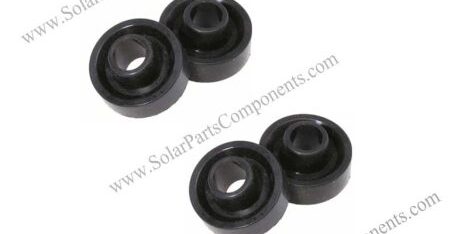
Hanger bolts and screws that penetrate a roof membrane are the most common source of leaks. An EPDM sealing washer bonded to a steel washer creates a dual-action seal.
-
Mechanics: As the bolt is torqued, the EPDM compresses and flows to form a watertight seal around the fastener shank and under the head.
-
Benefit: This prevents water from tracking along the thread path into the building structure, which is the leading cause of roof leaks in penetrated installations.
Function 2: Panel Gap Sealing (The Canopy Effect)
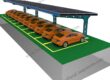
For solar carports, awnings, or any installation where a dry space underneath is required, T-shaped EPDM gaskets are pressed into the gaps between panel frames.
-
Mechanics: The T-profile design allows the stem to compress into the gap while the crossbar creates a wide, overlapping seal on the panel surface.
-
Benefit: This transforms the array into a secondary waterproofing layer, preventing rain, dust, and debris from falling through, thereby protecting the area below.
4. The Installation Advantage: Precision Over Adhesives
A key benefit of molded EPDM gaskets is their mechanical retention, which is superior to liquid sealants.
-
No Cure Time: Unlike silicone or urethane caulking, EPDM gaskets provide an immediate seal upon compression, with no risk of improper curing due to humidity or temperature.
-
No Mess or Error: Eliminates the risk of sealant misapplication, which can lead to incomplete coverage or aesthetic issues.
-
Serviceability: If a panel needs to be replaced, the gasket can be reused or easily swapped, whereas cured sealant requires messy and time-consuming removal.
5. The Verdict: A Low-Cost Insurance Policy
For asset managers and installers, specifying high-quality EPDM gaskets is a negligible upfront cost that delivers outsized long-term returns.
-
Corrosion Prevention: By keeping water away from steel fasteners and aluminum frames, EPDM seals prevent the costly structural degradation that can compromise an entire array’s wind rating.
-
Warranty Protection: Many panel and racking manufacturers require specific sealing solutions to maintain their long-term warranties. Using non-compliant generic seals can void this coverage.
-
OPEX Reduction: A proper seal eliminates the need for mid-life leak investigations and reactive repairs, keeping operational costs predictable.
In the calculus of solar investment, the EPDM gasket is the definitive low-cost, high-impact component that ensures the system’s longevity is measured in decades, not years.