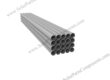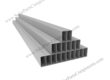

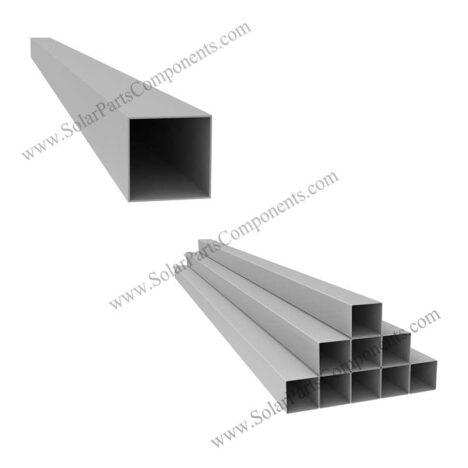
Square Steel Tube for Solar Mounting – ZAM275
- Product Type: Solar Racking
- Product Model: SPC-SHS
- Material: SD350-ZM
- Max Wind Load : 60 m/s
- Max Snow Load : 1.4 KN / M 2
- Solar Module Orientation: Landscape / Horizontal
- Application: Framed / Bifacial / Frameless modules
Overview:
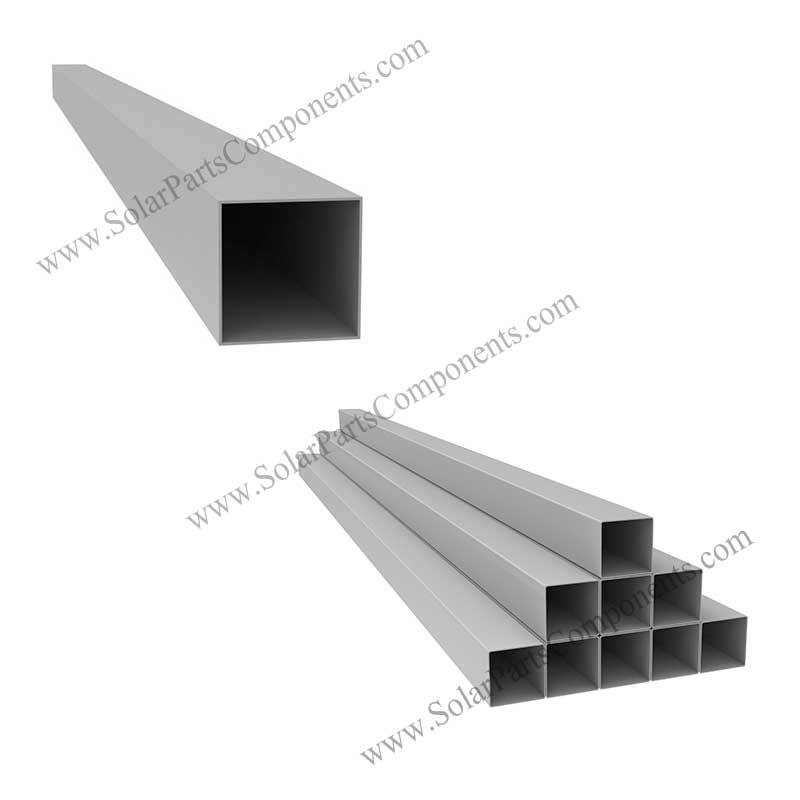
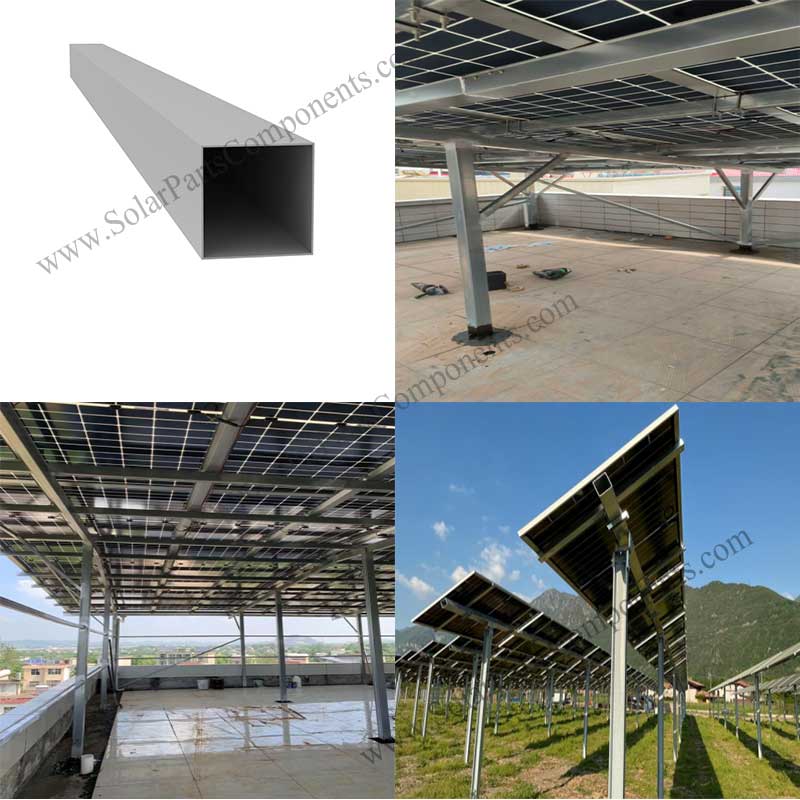
Square steel tubes serve as the structural backbone for many solar mounting systems, particularly in ground-mounted arrays, solar carports, and large-scale utility projects. They are chosen for their high load-bearing capacity, torsional rigidity, and ability to withstand significant wind and snow loads.
Key Specifications for this Square Steel Tube:
We are good partener with EPCs, distributors,and installers, these are the critical details you will require:
- Dimensions (Profile Size):
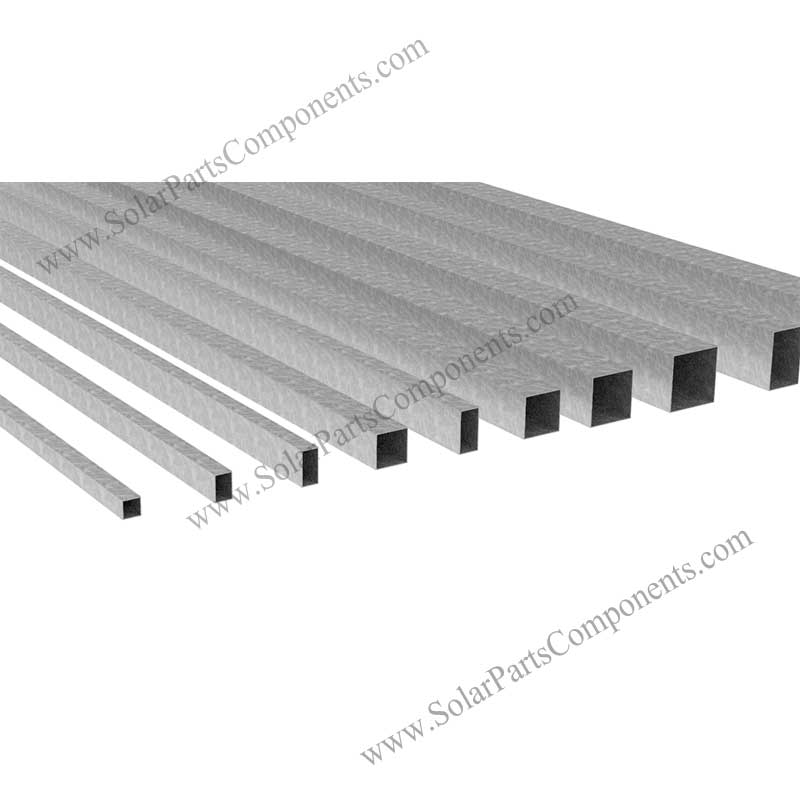
Common sizes include 40×40mm (often used for smaller rails or purlins), 50×50mm, 60×60mm, 80×80mm,100×100mm,120×120mm, 140×140mm…… (for main support posts).
- Wall Thickness:
Typically ranges from 1.8mm to 3.0mm depending on the structural load requirements.
- Material & Coating (Anti-Corrosion):
ZAM (Zinc-Aluminum-Magnesium): Increasingly popular for superior corrosion resistance in harsh or coastal environments.
- Length:
Our Standard lengths are usually 6 meters, but our factory can provide custom cut-to-length services to reduce onsite waste.
Typical Applications
- Ground-Mount Systems:Used as vertical posts driven into the ground or attached to ground screws.
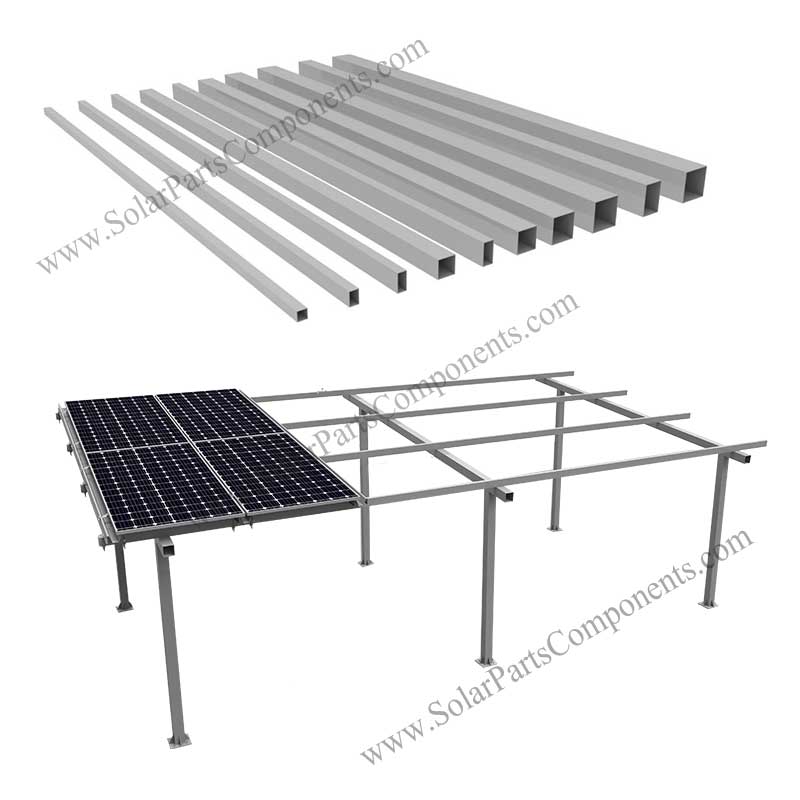
- Solar Carports:Used for the main frame and roof purlins to support the weight of the panels and the structure itself.
- Industrial Rooftop Racking:Used when the roof structure requires a more robust, heavy-duty support system than standard aluminum rails.
Why it’s used
- Good strength-to-weightratio
- Simple fabrication for drilling, welding, and brackets
- Works with standard racking components (brackets, clamps, end caps, connectors)
Sales & Quotation Advice
To provide a professional quote that helps you close the deal, please kind let us know the informations as the following:
- Design/Structural Drawings:It would be perfect if you have a BOQ (Bill of Quantities) or structural design.
- Load Requirements:Are there specific wind or snow load standards (e.g., Eurocode, AS/NZS) the steel must meet?
- Hole Punching:Do you require pre-punched holes for assembly?
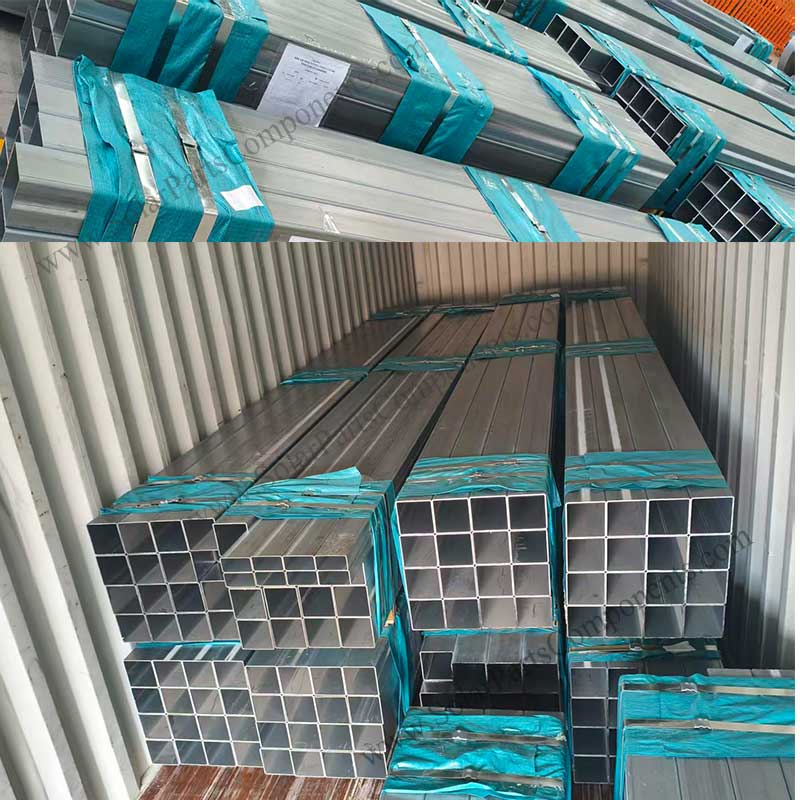
- Packaging:Do you need bundles, or specific crating for international shipping?
As a professional Square Steel Tube manufacture factory, we accept OEM&ODM service for our customers. General size bulk in stock, fast shipping, competitive price, welcome contact us for more details.
| Brief Descriptions: | |
| Solar Mounting Components –Square Steel Tube for Solar Mounting | |
| Item type: | Square Steel Tube |
| Type: | Solar Structure |
| Installation Site: | flat roof or ballasted ground |
| Profile Material: | Steel |
| Color: | Plain |
| Fasen Parts: | Steel |
| PV Modules: | Framed or frameless |
| Module Orientation: | Landscape and Portrait |
| Standards: | AS/NZS 1170 |
| DIN 1055 | |
| GB50009-2012 | |
| IBC2009 | |
| TUV | |
| JIS C 8955: 2011 | |
| International Building Code IBC 2009 | |
| California Building Code CBC 2010 | |
| Warranty | 10 years |
| Designed Lifespan | 25 years |
| Packing Details: | |
| Inner: | Bubble bag + inner box + Carton |
| Outer: | Wooden Box, Steel Pallet, MDF, etc |
Why Steel Tubes Are Crucial in PV Systems?
In any photovoltaic (PV) installation, the mounting system is what keeps the modules in place for 25+ years of outdoor exposure. Square steel tubes form the structural backbone of most heavy-duty and ground-mounted PV systems — from utility-scale solar farms to commercial rooftop arrays and carport structures. The following Q&As explain why they matter, how they are specified, and what to consider when sourcing them.
1. What makes steel tubes so important in PV systems?
Steel tubes carry four non-negotiable jobs in a PV array:
- Structural support — holding the weight of the modules against gravity over decades.
- Wind and snow load resistance — resisting uplift, drag, and accumulated snow loads.
- Long-term dimensional stability — keeping panel tilt and alignment true across 25+ years of thermal cycling.
- Interface compatibility — providing a rigid anchor for clamps, brackets, and module frames.
Compared with thin aluminum rails, square steel tubes can be produced in much larger cross-sections (40×40mm up to 140×140mm and beyond), which is essential when the span between foundations is long, or when the design must meet strict wind and snow codes such as Eurocode or AS/NZS 1170.
2. What loads must steel tubes in PV systems handle?
A properly specified steel tube for solar mounting is typically rated to handle:
- Max wind load: up to 60 m/s (≈ 216 km/h) — covering typhoon-zone and coastal installations.
- Max snow load: up to 1.4 kN/m² — equivalent to roughly 140 kg of snow per square meter.
These ratings apply to the finished structure, so the steel tube itself must keep enough margin in both bending and torsion. That’s why our SPC-SHS profile uses SD350-grade steel with controlled wall thickness — the structure stays within elastic limits under the worst expected load combination.
3. What material and coating should I choose?
For solar mounting in outdoor conditions, the coating matters as much as the base steel grade. For most PV applications, ZAM (Zinc-Aluminum-Magnesium) coated steel is now the preferred choice — it offers superior corrosion resistance compared with standard galvanizing, especially in harsh or coastal environments where salt spray, humidity, or agricultural chemicals attack the steel.
Our SPC-SHS profile uses SD350-grade steel with ZAM275 coating — a balance of strength, formability, and long-term corrosion protection that suits the majority of utility, commercial, and carport installations.
4. Which tube sizes are most common?
Most PV steel structures use one of these profiles:
| Profile | Typical role in PV systems |
| 40×40mm | Light rails, purlins, cross-bracing |
| 50×50mm / 60×60mm | Mid-duty rails, small ground-mount posts |
| 80×80mm / 100×100mm | Main posts for ground-mount systems |
| 120×120mm / 140×140mm | Heavy utility-scale or carport main columns |
The right size depends on span, panel area, wind zone, and snow zone — not just module count. Larger profiles are chosen when foundations are spaced further apart or when the local code demands higher safety factors.
5. What wall thickness do I need?
For solar mounting, wall thickness usually falls between 1.8mm and 3.0mm:
- 1.8–2.0mm — light commercial and small ground-mount.
- 2.0–2.5mm — standard ground-mount and carport applications.
- 2.5–3.0mm — utility-scale, high wind/snow zones, or longer spans.
Thicker walls cost more and add weight, so specifying the minimum thickness that satisfies your structural calculation is the smart move. Over-specifying steel is one of the most common sources of unnecessary cost in PV mounting projects.
6. Where exactly are steel tubes used in PV systems?
Three primary application areas:
- Ground-mount systems — as vertical posts driven into the ground, mounted on ground screws, or fixed to concrete foundations.
- Solar carports — as main frame columns and roof purlins, carrying both the panels and the canopy’s own weight.
- Industrial rooftop racking — when the roof structure demands heavier support than standard aluminum rails can provide.
In all three, the steel tube is the load path. Everything else — module clamps, mid-clamps, end-clamps, splice connectors, L-feet — connects to it.
7. Why use square tubes instead of round tubes or C-channels?
Square tubes win on three points that matter in PV mounting:
- Torsional rigidity — a closed square section resists twisting far better than an open C-channel, which is critical under uneven wind loading.
- Easier fabrication — flat faces are simple to drill, weld, and bolt to; brackets sit flush without saddle plates.
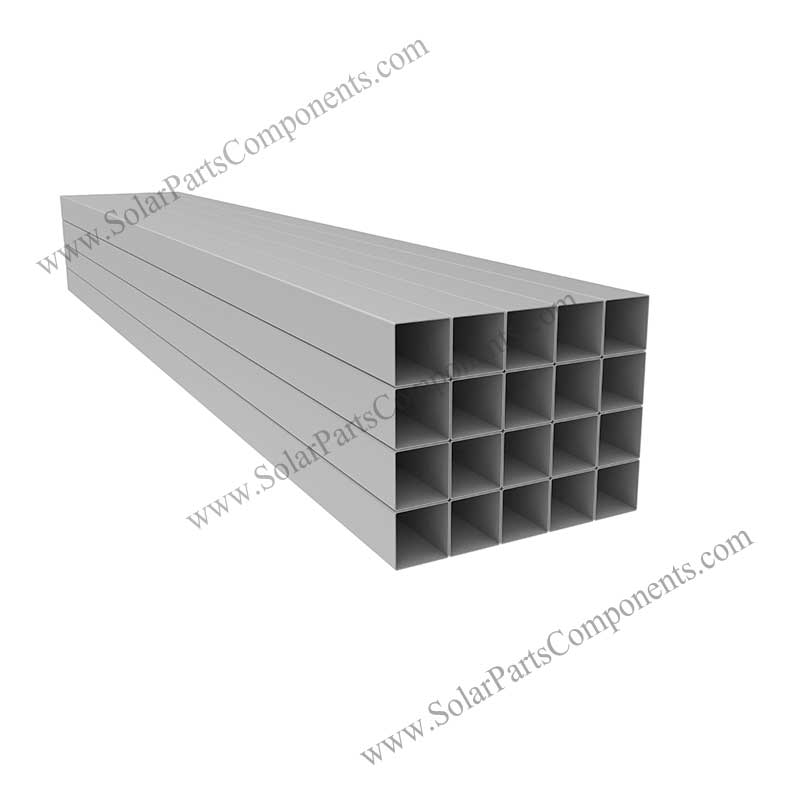
- Better stackability and shipping — square tubes pack efficiently into standard 20ft/40ft containers, reducing freight per kilogram of steel delivered to site.
For most PV mounting, the square profile gives you the best balance of strength, ease of assembly, and logistics cost.
8. Can the steel tubes be customized for my project?
Yes — and for serious projects you should. Typical customization options include:
- Cut-to-length — standard 6m lengths can be cut to your exact spec to reduce on-site waste and labor.
- Pre-punched holes — for bolted connections between posts, rails, and brackets, eliminating field drilling.
- Higher coating mass — extra ZAM thickness for coastal or highly corrosive sites.
- Color coating — for architectural integration on visible carports or commercial rooftops.
- OEM/ODM — private labeling and packaging for distributors and integrators.
If you have a Bill of Quantities (BOQ) or a structural drawing, send it over and we can propose a per-piece cut list and hole pattern before production starts.
9. What information do I need to provide for an accurate quote?
To quote accurately, please share:
- Structural drawings or BOQ — quantities, sizes, lengths, hole patterns.
- Project site conditions — wind zone, snow zone, soil type, corrosivity category.
- Applicable codes — Eurocode, AS/NZS 1170, IBC, JIS, or local standards.
- Hole pattern requirements — pre-punched at the mill, or drilled on site.
- Packaging preference — bundles, crates, or container-optimized packing for international shipping.
The more complete the brief, the faster and tighter our pricing.
10. Are steel tubes compatible with standard PV racking accessories?
Yes. Square steel tubes work with the full range of standard solar mounting hardware — including module clamps, mid-clamps, end-clamps, splice connectors, L-feet, ground screws, and concrete anchors. Because the cross-section is standardized and the wall thickness is uniform, brackets from virtually any racking supplier can be specified to fit the same tube.
This makes steel tubes a flexible choice when you are mixing suppliers or assembling a hybrid system.
Steel tubes aren’t just one option among many in a PV system — they are the load-bearing foundation that lets the rest of the structure do its job for 25+ years. Choosing the right size, wall thickness, and coating (especially ZAM275 for harsh sites) is what separates a mounting system that lasts from one that becomes a long-term maintenance liability.
If you have a project in mind, send us the structural drawing or BOQ and we’ll quote within 24 hours.
Can Square Steel Tube be Solar Mounting Pole?
–Dear Sirs SOLAR PARTS, my name is Daniel Natividad, General Manager of SCIP.
Our company specializes in the execution of automation and power control
projects in low and medium voltage.
Our operations are primarily located in northern Peru, serving the mining,
cement, water, and paper sectors. We are currently implementing a solar
power, so we need to acquire square steel tube for solar mounting single pole.
We request a quote for the following:
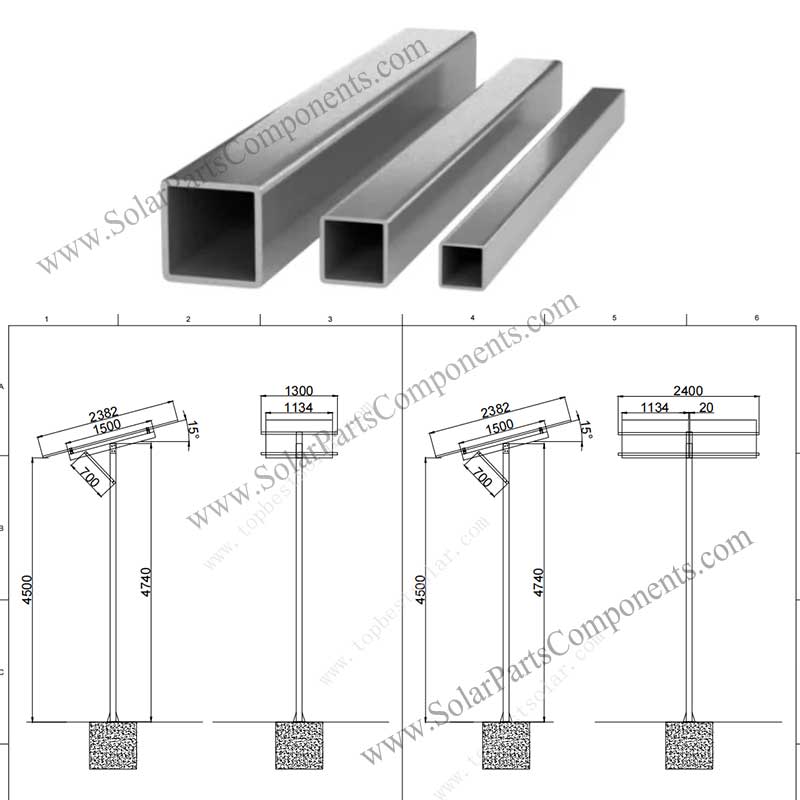
1936 Units. Single Pole Solar Mounting Structure for 1 Panel
Tilt Angle: 15°
Pole Height: 4500mm
Wind speed: 10m/s
Foundation. Concrete
40 Units. Single Pole Solar Mounting Structure for 2 Panel
Tilt Angle: 15°
Pole Height: 4500mm
Wind speed: 10m/s
Foundation. Concrete
Panel Model: JKM650 (Jinko Solar 650W)
Quote FOB
Please confirm receipt of this message.
Best Regards.
BR.
Daniel E. Natividad Caro
square steel tube for solar stucture
— Hello Daniel,
Yes our Square Steel Tube for Solar Mounting is widely used for solar mounting structures as Pole/Purlin/Beam….
With high quality ZAM275 material, the system is designed for a service life of 25+ years, matching the standard warranty period of most PV modules. Stainless steel fasteners can be specified for coastal or high-humidity environments.
We offer full OEM/ODM support: custom pipe dimensions, wall thickness, tilt angles, special coating colors (e.g., powder-coated black), and module layouts. We also print your logo and provide custom packaging. Share your drawings or site conditions and our engineers will tailor the design.
What is Zn-Al-Mg coating and why is it better than galvanized?
Zn-Al-Mg is a zinc-aluminum-magnesium alloy coating (EN 10346 ZM system). Compared with traditional hot-dip galvanized pure zinc, it offers 2–10× longer salt-spray life and a self-healing effect: when the tube is cut, drilled or scratched, the coating migrates to protect the exposed steel. For coastal and typhoon-zone solar plants it means fewer corrosion failures over the project lifetime.
- Overview
-
Overview:
Square steel tubes serve as the structural backbone for many solar mounting systems, particularly in ground-mounted arrays, solar carports, and large-scale utility projects. They are chosen for their high load-bearing capacity, torsional rigidity, and ability to withstand significant wind and snow loads.
Key Specifications for this Square Steel Tube:
We are good partener with EPCs, distributors,and installers, these are the critical details you will require:
- Dimensions (Profile Size):
Common sizes include 40×40mm (often used for smaller rails or purlins), 50×50mm, 60×60mm, 80×80mm,100×100mm,120×120mm, 140×140mm…… (for main support posts).
- Wall Thickness:
Typically ranges from 1.8mm to 3.0mm depending on the structural load requirements.
- Material & Coating (Anti-Corrosion):
ZAM (Zinc-Aluminum-Magnesium): Increasingly popular for superior corrosion resistance in harsh or coastal environments.
- Length:
Our Standard lengths are usually 6 meters, but our factory can provide custom cut-to-length services to reduce onsite waste.
Typical Applications
- Ground-Mount Systems:Used as vertical posts driven into the ground or attached to ground screws.
- Solar Carports:Used for the main frame and roof purlins to support the weight of the panels and the structure itself.
- Industrial Rooftop Racking:Used when the roof structure requires a more robust, heavy-duty support system than standard aluminum rails.
Why it’s used
- Good strength-to-weightratio
- Simple fabrication for drilling, welding, and brackets
- Works with standard racking components (brackets, clamps, end caps, connectors)
Sales & Quotation Advice
To provide a professional quote that helps you close the deal, please kind let us know the informations as the following:
- Design/Structural Drawings:It would be perfect if you have a BOQ (Bill of Quantities) or structural design.
- Load Requirements:Are there specific wind or snow load standards (e.g., Eurocode, AS/NZS) the steel must meet?
- Hole Punching:Do you require pre-punched holes for assembly?
- Packaging:Do you need bundles, or specific crating for international shipping?
As a professional Square Steel Tube manufacture factory, we accept OEM&ODM service for our customers. General size bulk in stock, fast shipping, competitive price, welcome contact us for more details.
- Specification
-
Brief Descriptions: Solar Mounting Components –Square Steel Tube for Solar Mounting Item type: Square Steel Tube Type: Solar Structure Installation Site: flat roof or ballasted ground Profile Material: Steel Color: Plain Fasen Parts: Steel PV Modules: Framed or frameless Module Orientation: Landscape and Portrait Standards: AS/NZS 1170 DIN 1055 GB50009-2012 IBC2009 TUV JIS C 8955: 2011 International Building Code IBC 2009 California Building Code CBC 2010 Warranty 10 years Designed Lifespan 25 years Packing Details: Inner: Bubble bag + inner box + Carton Outer: Wooden Box, Steel Pallet, MDF, etc - FAQ
-
Why Steel Tubes Are Crucial in PV Systems?
In any photovoltaic (PV) installation, the mounting system is what keeps the modules in place for 25+ years of outdoor exposure. Square steel tubes form the structural backbone of most heavy-duty and ground-mounted PV systems — from utility-scale solar farms to commercial rooftop arrays and carport structures. The following Q&As explain why they matter, how they are specified, and what to consider when sourcing them.
1. What makes steel tubes so important in PV systems?
Steel tubes carry four non-negotiable jobs in a PV array:
- Structural support — holding the weight of the modules against gravity over decades.
- Wind and snow load resistance — resisting uplift, drag, and accumulated snow loads.
- Long-term dimensional stability — keeping panel tilt and alignment true across 25+ years of thermal cycling.
- Interface compatibility — providing a rigid anchor for clamps, brackets, and module frames.
Compared with thin aluminum rails, square steel tubes can be produced in much larger cross-sections (40×40mm up to 140×140mm and beyond), which is essential when the span between foundations is long, or when the design must meet strict wind and snow codes such as Eurocode or AS/NZS 1170.
2. What loads must steel tubes in PV systems handle?
A properly specified steel tube for solar mounting is typically rated to handle:
- Max wind load: up to 60 m/s (≈ 216 km/h) — covering typhoon-zone and coastal installations.
- Max snow load: up to 1.4 kN/m² — equivalent to roughly 140 kg of snow per square meter.
These ratings apply to the finished structure, so the steel tube itself must keep enough margin in both bending and torsion. That’s why our SPC-SHS profile uses SD350-grade steel with controlled wall thickness — the structure stays within elastic limits under the worst expected load combination.
3. What material and coating should I choose?
For solar mounting in outdoor conditions, the coating matters as much as the base steel grade. For most PV applications, ZAM (Zinc-Aluminum-Magnesium) coated steel is now the preferred choice — it offers superior corrosion resistance compared with standard galvanizing, especially in harsh or coastal environments where salt spray, humidity, or agricultural chemicals attack the steel.
Our SPC-SHS profile uses SD350-grade steel with ZAM275 coating — a balance of strength, formability, and long-term corrosion protection that suits the majority of utility, commercial, and carport installations.
4. Which tube sizes are most common?
Most PV steel structures use one of these profiles:
Profile Typical role in PV systems 40×40mm Light rails, purlins, cross-bracing 50×50mm / 60×60mm Mid-duty rails, small ground-mount posts 80×80mm / 100×100mm Main posts for ground-mount systems 120×120mm / 140×140mm Heavy utility-scale or carport main columns The right size depends on span, panel area, wind zone, and snow zone — not just module count. Larger profiles are chosen when foundations are spaced further apart or when the local code demands higher safety factors.
5. What wall thickness do I need?
For solar mounting, wall thickness usually falls between 1.8mm and 3.0mm:
- 1.8–2.0mm — light commercial and small ground-mount.
- 2.0–2.5mm — standard ground-mount and carport applications.
- 2.5–3.0mm — utility-scale, high wind/snow zones, or longer spans.
Thicker walls cost more and add weight, so specifying the minimum thickness that satisfies your structural calculation is the smart move. Over-specifying steel is one of the most common sources of unnecessary cost in PV mounting projects.
6. Where exactly are steel tubes used in PV systems?
Three primary application areas:
- Ground-mount systems — as vertical posts driven into the ground, mounted on ground screws, or fixed to concrete foundations.
- Solar carports — as main frame columns and roof purlins, carrying both the panels and the canopy’s own weight.
- Industrial rooftop racking — when the roof structure demands heavier support than standard aluminum rails can provide.
In all three, the steel tube is the load path. Everything else — module clamps, mid-clamps, end-clamps, splice connectors, L-feet — connects to it.
7. Why use square tubes instead of round tubes or C-channels?
Square tubes win on three points that matter in PV mounting:
- Torsional rigidity — a closed square section resists twisting far better than an open C-channel, which is critical under uneven wind loading.
- Easier fabrication — flat faces are simple to drill, weld, and bolt to; brackets sit flush without saddle plates.
- Better stackability and shipping — square tubes pack efficiently into standard 20ft/40ft containers, reducing freight per kilogram of steel delivered to site.
For most PV mounting, the square profile gives you the best balance of strength, ease of assembly, and logistics cost.
8. Can the steel tubes be customized for my project?
Yes — and for serious projects you should. Typical customization options include:
- Cut-to-length — standard 6m lengths can be cut to your exact spec to reduce on-site waste and labor.
- Pre-punched holes — for bolted connections between posts, rails, and brackets, eliminating field drilling.
- Higher coating mass — extra ZAM thickness for coastal or highly corrosive sites.
- Color coating — for architectural integration on visible carports or commercial rooftops.
- OEM/ODM — private labeling and packaging for distributors and integrators.
If you have a Bill of Quantities (BOQ) or a structural drawing, send it over and we can propose a per-piece cut list and hole pattern before production starts.
9. What information do I need to provide for an accurate quote?
To quote accurately, please share:
- Structural drawings or BOQ — quantities, sizes, lengths, hole patterns.
- Project site conditions — wind zone, snow zone, soil type, corrosivity category.
- Applicable codes — Eurocode, AS/NZS 1170, IBC, JIS, or local standards.
- Hole pattern requirements — pre-punched at the mill, or drilled on site.
- Packaging preference — bundles, crates, or container-optimized packing for international shipping.
The more complete the brief, the faster and tighter our pricing.
10. Are steel tubes compatible with standard PV racking accessories?
Yes. Square steel tubes work with the full range of standard solar mounting hardware — including module clamps, mid-clamps, end-clamps, splice connectors, L-feet, ground screws, and concrete anchors. Because the cross-section is standardized and the wall thickness is uniform, brackets from virtually any racking supplier can be specified to fit the same tube.
This makes steel tubes a flexible choice when you are mixing suppliers or assembling a hybrid system.
Steel tubes aren’t just one option among many in a PV system — they are the load-bearing foundation that lets the rest of the structure do its job for 25+ years. Choosing the right size, wall thickness, and coating (especially ZAM275 for harsh sites) is what separates a mounting system that lasts from one that becomes a long-term maintenance liability.
If you have a project in mind, send us the structural drawing or BOQ and we’ll quote within 24 hours.
Can Square Steel Tube be Solar Mounting Pole?
–Dear Sirs SOLAR PARTS, my name is Daniel Natividad, General Manager of SCIP.
Our company specializes in the execution of automation and power control
projects in low and medium voltage.
Our operations are primarily located in northern Peru, serving the mining,
cement, water, and paper sectors. We are currently implementing a solar
power, so we need to acquire square steel tube for solar mounting single pole.
We request a quote for the following:
1936 Units. Single Pole Solar Mounting Structure for 1 Panel
Tilt Angle: 15°
Pole Height: 4500mm
Wind speed: 10m/s
Foundation. Concrete
40 Units. Single Pole Solar Mounting Structure for 2 Panel
Tilt Angle: 15°
Pole Height: 4500mm
Wind speed: 10m/s
Foundation. Concrete
Panel Model: JKM650 (Jinko Solar 650W)
Quote FOB
Please confirm receipt of this message.
Best Regards.
BR.
Daniel E. Natividad Caro
square steel tube for solar stucture
— Hello Daniel,
Yes our Square Steel Tube for Solar Mounting is widely used for solar mounting structures as Pole/Purlin/Beam….
With high quality ZAM275 material, the system is designed for a service life of 25+ years, matching the standard warranty period of most PV modules. Stainless steel fasteners can be specified for coastal or high-humidity environments.
We offer full OEM/ODM support: custom pipe dimensions, wall thickness, tilt angles, special coating colors (e.g., powder-coated black), and module layouts. We also print your logo and provide custom packaging. Share your drawings or site conditions and our engineers will tailor the design.
What is Zn-Al-Mg coating and why is it better than galvanized?
Zn-Al-Mg is a zinc-aluminum-magnesium alloy coating (EN 10346 ZM system). Compared with traditional hot-dip galvanized pure zinc, it offers 2–10× longer salt-spray life and a self-healing effect: when the tube is cut, drilled or scratched, the coating migrates to protect the exposed steel. For coastal and typhoon-zone solar plants it means fewer corrosion failures over the project lifetime.
- Leave Message
-