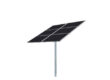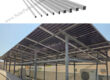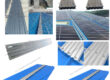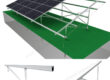

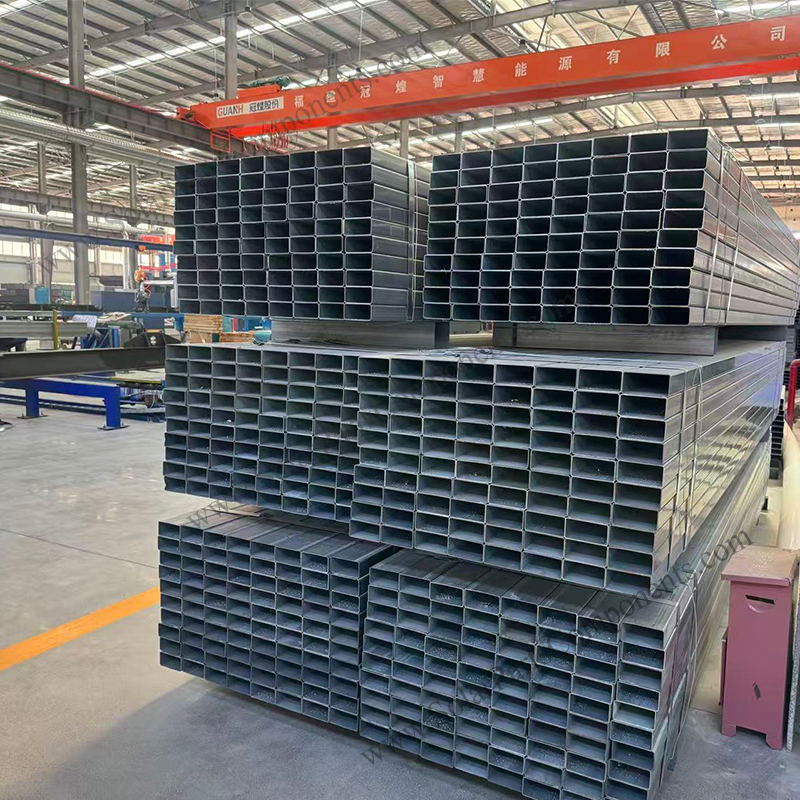
Rectangular steel tube for solar mounting is the workhorse of PV racking — the rails, purlins and main beams that carry modules and distribute wind load in ground-mount, rooftop and carport systems. This page covers rectangular hollow sections (RHS) in S350GD+ZM (Zn-Al-Mg coated, EN 10346) in the sizes Southeast Asian EPCs order most: 30×50, 50×100, 60×40, 80×40 and 150×100 mm. Our rectangular tubes are produced exclusively for solar PV mounting structures — not for scaffolding, furniture, handrails, water supply or general construction use.
RHS vs SHS — why rectangular tube for solar mounting
Both SHS (square) and RHS (rectangular) hollow sections are used in PV structures, but they do different jobs. Because an RHS has different strong and weak axes, it resists bending more efficiently in one direction — which makes it the natural choice for rails and purlins spanning between columns, and for main beams where the load acts primarily in a single plane. Using RHS instead of an equivalent SHS saves steel weight on the same span — a direct saving in both material cost and freight.
Why S350GD+ZM
The base grade is S350GD (yield strength 350 MPa, EN 10346), compared with 235 MPa for common Q235B tube. The coating is Zn-Al-Mg (ZM275), a zinc-aluminum-magnesium alloy that outlasts hot-dip galvanized pure zinc in salt-spray testing by 2–10× and self-heals at cut edges. The combination means: lighter sections for the same load, and no corrosion failures at drilled holes or cut ends — the two failure points that plague ordinary galvanized tube in tropical, coastal projects.
Rectangular tube sizes and specifications
| Section (mm) | Wall thickness (mm) | Typical use in PV mounting |
|---|---|---|
| 30 × 50 | 1.8 | Module rails & purlins |
| 60 × 40 | 2.0 | Purlins & rails |
| 50 × 100 | 2.0 | Purlins & main beams |
| 80 × 40 | 2.0 | Purlins & main beams |
| 150 × 100 | 3.0 | Main beams / heavy structures |
Material spec: Grade S350GD+ZM (EN 10346) · coating ZM275 (≥275 g/m² triple-spot, all sizes) · wall thickness 1.8–3.0 mm · standard length 6 m or cut-to-length · custom sections on request.
Typical applications in PV mounting structures
- Ground mount: purlins spanning between columns; main beams on large-format arrays.
- Rooftop C&I: low-profile rails and frames where section height must stay compact.
- Carport: horizontal beams with long clear spans over parking rows.
Orientation matters in RHS design: a 50×100 tube bends more efficiently around its deeper axis, so beams are usually installed with the 100 mm dimension vertical. Our engineers can confirm the right orientation and section for your wind load case.
On-site fabrication — why the self-healing coating matters
PV structures are rarely installed exactly as drawn. Brackets are repositioned, holes drilled, ends cut — and every cut is where corrosion starts on ordinary galvanized tube. With Zn-Al-Mg (ZM275), the alloy migrates to cover freshly exposed steel, so field modifications do not leave unprotected bare metal. This is a concrete, on-site benefit: installers do not need to touch up cut edges, and the structure’s corrosion warranty survives installation.
Tropical coastal performance
For projects near the coast in the Philippines, Vietnam, Indonesia or Thailand — or in high-humidity inland sites — Zn-Al-Mg shifts the corrosion story. Salt-spray life of 2–10× vs HDG and self-healing edges mean purlins and rails keep their section properties over the 25-year design life of the plant. Maintenance and re-coating cycles lengthen accordingly.