
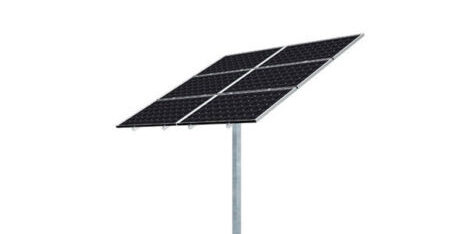
Designing a ground-mounted PV array often comes with land-use constraints. In agricultural settings, remote off-grid sites, or rural properties with grazing livestock, traditional multi-pole ground mounts can obstruct farming equipment or become vulnerable to cattle damage. The Quadrate Steel Solar Pole Mounting Systems solve this by elevating the entire solar array on a single, robust quadrate steel post, preserving valuable ground space while delivering exceptional structural stability.
Engineered for both open and rough terrain, this system combines the torsional rigidity of square steel tubing with the lightweight properties of anodized aluminum rails. For EPCs, system integrators, and procurement managers, this single-pole architecture offers a cost-effective, high-density racking solution that meets stringent international building codes.
Engineering Specifications of the Quadrate Steel Solar Pole Mounting Systems
The structural integrity of any pole-mounted PV system relies on the synergy between its foundation, vertical post, and racking hardware. The Quadrate Steel Solar Pole Mounting Systems are built using a hybrid of high-strength materials to ensure a 25-year design lifespan even in harsh environmental conditions.
Key structural parameters include:
- Material Composition: AL6005-T5 anodized aluminum for rails and clamps; Q235B hot-dip galvanized steel for the quadrate post and beams.
- Wind Load Resistance: Up to 60 m/s, engineered to withstand extreme gusts in open plains and coastal regions.
- Snow Load Capacity: 1.4 KN/M², providing reliable support for winter accumulation.
- Tilt Angle Adjustability: 15° to 60°, allowing for seasonal optimization based on geographic latitude.
- Module Orientation: Portrait (vertical) or landscape (transverse) configurations to maximize panel density per pole.
- Compliance Standards: AS/NZS 1170, DIN 1055, GB50009-2012, IBC 2009, and TUV certified.
The use of Q235B hot-dip galvanized steel for the square post provides superior resistance to deformation compared to standard round pipes. This is critical for maintaining the structural integrity of the Quadrate Steel Solar Pole Mounting Systems when subjected to high eccentric loads from the solar panels.
The Structural Advantage of Quadrate Steel in Solar Mounting
When evaluating a solar pole mounting system, the cross-sectional shape of the vertical post is a critical engineering detail. Round steel pipes are common, but square (quadrate) steel tubes offer distinct mechanical advantages for PV racking.
The Quadrate Steel Solar Pole Mounting Systems utilize a square cross-section to deliver enhanced torsional stiffness. When wind loads strike the panels, the force creates a twisting moment on the pole. The flat surfaces of a quadrate post provide a more stable, weld-friendly interface for attaching girders and beams compared to the curved surface of a round pole.
Additionally, the hot-dip galvanized coating on the Q235B steel ensures long-term corrosion resistance. When paired with AL6005-T5 anodized aluminum rails and stainless steel 304 fasteners, the system effectively mitigates bi-metallic corrosion. This material combination allows the Quadrate Steel Solar Pole Mounting Systems to deliver a 20-year anti-corrosion warranty and a 25-year designed service life.
Pre-Assembled Components for Rapid Deployment
Time on site translates directly to project costs. The Quadrate Steel Solar Pole Mounting Systems are designed with a pre-assembled, classified packing methodology to streamline the installation process.
The comprehensive kit includes:
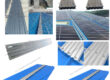
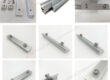
- Aluminum Clamps: Mid clamps and end clamps designed to securely grip framed or frameless PV modules without causing micro-cracks.
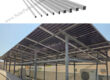
- Racking Infrastructure: Alum C clamps, rails (Rail 45), rail splices, girders, and beam connectors that interlock to form a rigid support structure.
- Pole Interface Hardware: Adjustable tube connectors, adjustable poles, and splices for the quadrate post to ensure precise leveling and tilt adjustment.
Because the aluminum components arrive pre-assembled and sorted, on-site labor is significantly reduced. Installers can quickly attach the rails to the girder, secure the panels with the mid and end clamps, and adjust the tilt angle using the adjustable pole mechanism. This modularity makes the Quadrate Steel Solar Pole Mounting Systems highly adaptable for projects requiring fast commissioning.
Application Scenarios for Single Pole Solar Mounts
The versatility of the Quadrate Steel Solar Pole Mounting Systems makes them suitable for a wide range of environments where traditional ground mounts are impractical.
Cattle-Proof Rural Installations
In agricultural settings, protecting solar assets from livestock is a major concern. A single-pole structure elevates the panels well above the reach of grazing cattle, eliminating the risk of damage. The robust quadrate steel post resists impact, and the open space beneath the array allows for unrestricted movement of machinery and animals.
Off-Grid and Remote Power Systems
For remote cabins, telecom stations, or off-grid water pumping systems, the Quadrate Steel Solar Pole Mounting Systems provide a self-contained power generation platform. The ability to install these systems on uneven or rocky terrain without extensive concrete foundations makes them ideal for isolated locations.
High Wind Zone PV Arrays
With a maximum wind load rating of 60 m/s, these systems are engineered for hurricane-prone regions and exposed coastal areas. The low aerodynamic profile and high torsional stiffness of the quadrate post ensure the array remains stable during severe weather events.
Small Commercial and Community Solar
When roof space is insufficient or structurally unsound, the Quadrate Steel Solar Pole Mounting Systems offer a scalable ground alternative. Multiple poles can be installed in a field to create a distributed solar farm, each operating independently to maximize energy harvest.
Foundation and Site Preparation
A successful pole mount installation begins with a solid foundation. The Quadrate Steel Solar Pole Mounting Systems can be adapted to various soil conditions through two primary embedding methods.
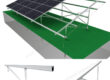
For standard soil conditions, the quadrate post can be directly buried 1 to 2 meters into the ground. This method provides excellent static stability and is cost-effective for large-scale deployments. In areas with rocky terrain or where concrete is required, a flanged base plate can be bolted to a pre-cast concrete pier.
Proper foundation depth is crucial for resisting the uplift and overturning moments generated by 60 m/s wind loads. By integrating structural engineering calculations into every project, the Quadrate Steel Solar Pole Mounting Systems ensure that the foundation and the pole work together as a unified, load-bearing structure.
Optimizing Energy Yield With Adjustable Tilt
One of the primary benefits of the Quadrate Steel Solar Pole Mounting Systems is the ability to adjust the tilt angle between 15° and 60°. Unlike fixed-tilt ground mounts, this adjustability allows system owners to optimize the array’s angle relative to the sun’s position throughout the year.
In winter months, increasing the tilt angle captures lower-angle sunlight and facilitates snow shedding, which is critical given the system’s 1.4 KN/M² snow load capacity. During summer, a lower tilt angle optimizes energy production during peak sun hours. This flexibility makes the Quadrate Steel Solar Pole Mounting Systems a high-performance choice for maximizing the return on investment in variable climates.
Integration With Ground Mounting and Carport Structures
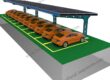
While the Quadrate Steel Solar Pole Mounting Systems excel as a standalone solution, they also integrate seamlessly into broader solar mounting strategies. For projects requiring a mix of mounting types, these pole mounts complement standard ground mounting systems and carport structures.
The shared use of AL6005-T5 aluminum rails and stainless steel 304 hardware across different mounting families simplifies inventory management for installers. Whether deploying a large-scale ground array or a specialized pole-mounted setup, the consistency in component quality ensures reliable performance across the entire solar installation portfolio.