Ownership verification is a fundamental prerequisite for solar panel installations, driven by three core considerations:
- Dispute prevention: Ensure the PV system is installed on a roof with legal ownership to mitigate potential risks in subsequent operations.
- Eligibility for national subsidies: National subsidy applications mandate proof of ownership as a mandatory document to qualify for preferential policies.
- Smooth grid connection & long-term maintenance: Power grid companies require ownership confirmation to process grid connection procedures, safeguarding reliable long-term operation.
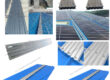
- Kliplock roof: It is fixed to the roof using a special clamp that requires no drilling, thus avoiding damage to the roof’s waterproofing;
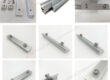
- Metal roof: Priority is given to mounting systems with water gutter or rail-free fixture. The former integrates drainage functionality, while the latter is suitable for metal roof with lower load-bearing capacity.
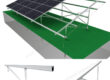
- Concrete roof: Ballasted mounting systems (secured by counterweights, no roof penetration) or pile-mounted mounting systems (for long-term installations on roofs with sufficient load-bearing capacity) are commonly used. The specific choice depends on the roof’s load-bearing data.
- The optimal installation angle—maximizing annual power generation—can be derived through software simulation or formula calculation based on the local latitude and longitude.
- Beyond power generation efficiency, factors such as local wind pressure, snow load, and inter-array shadow lengths must be considered to finalize the most suitable angle.
- For example, the recommended installation angle for carport BIPV systems is 0–15°.
- Comply with national standards and local government height restrictions.
- Account for local conditions such as snow depth and wind/sand intensity.
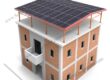
- Consider on-site obstacles on the roof (e.g., parapet walls) that may cause shading.