
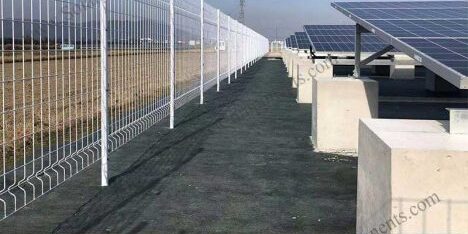
When planning a ground-mounted solar farm, the focus is often on panel efficiency and racking durability. However, one component that is frequently underestimated—yet critical to the project’s 25-year lifespan—is the perimeter security fence. A standard chain-link fence might suffice for basic deterrence, but for solar assets exposed to livestock, wildlife, and harsh agricultural environments, a hot-dip galvanized steel fence is the non-negotiable first line of defense. This article explains why this infrastructure component is essential for protecting your energy investment.
1. Beyond Deterrence: Physical Protection Against Livestock and Corrosion
The primary role of a solar fence is not just to mark a boundary but to prevent physical damage to costly electrical components. In rural or agricultural settings, this means designing for specific environmental threats.
-
Livestock and Animal Intrusion: Cattle, horses, and even large wildlife can easily bend or breach standard fencing. A QB235 steel wire mesh construction, with customizable mesh densities (e.g., 40x40mm or 50x50mm), provides the tensile strength needed to withstand animal impact, preventing trampling or chewing on cables and conduits.
-
Galvanized Defense Against Rust: Solar farms are often located in open fields with high humidity and temperature swings. The hot-dip galvanized coating creates a metallurgical bond with the steel, offering a 10-year warranty against corrosion. This is vital for maintaining structural integrity without the recurring cost of repainting or repairs.
-
Clean Environment Maintenance: By keeping out debris, unauthorized vehicles, and animals, the fence maintains a clean operating environment, reducing fire hazards and simplifying vegetation management.
2. Engineering for Extreme Weather: 60 m/s Wind Load Compliance
A fence is a large, continuous surface area that must withstand the same extreme weather events as the solar array itself. A failure here can lead to cascading damage.
-
Structural Wind Rating: The fence system is engineered to withstand wind loads up to 60 m/s, matching the design standards of the solar mounting structure. This ensures that during storms, the fence remains standing and does not become flying debris that could shatter PV modules.
-
Heavy-Duty Components: The system utilizes 48x48mm galvanized steel posts and L-shaped screw hooks for connecting mesh panels. This creates a rigid, triangulated structure that resists lateral forces and ground movement.
-
Foundation Flexibility: The design allows for various foundation types, including direct-driven piles or concrete footings, adapting to different soil conditions while maintaining a vertical tolerance of less than 3 degrees for a professional installation.
3. The Installation Advantage: Pre-Assembled Kits for Rapid Site Deployment
For EPC contractors, time spent erecting a fence is time not spent installing panels. The galvanized fence system is designed for speed and scalability.
-
Modular Design: Components are delivered as pre-cut, pre-assembled kits. Posts, mesh panels, and connectors are palletized for easy handling, reducing on-site fabrication and waste.
-
Standardized Workflow: The installation follows a repeatable sequence: set posts, attach mesh with L-hooks, and connect sections with clamps. This allows ground crews to work efficiently with basic tools like electric drivers and torque wrenches.
-
Terrain Adaptability: With components like slope area connectors, the fence can be installed on uneven ground without compromising security or aesthetics, ensuring a consistent barrier around the entire array.
4. Why This Fence is a Smart Capital Expenditure for Solar Assets
Investing in a high-quality fence upfront is a strategic decision that impacts long-term operational expenditures (OPEX) and asset valuation.
-
Reduced Lifetime Cost: While the initial cost may be higher than a basic fence, the 25-year design life eliminates the need for mid-project replacements. This aligns with the PV system’s lifespan, ensuring the asset is fully protected for its entire operational period.
-
Insurance and Compliance Benefits: A robust, code-compliant fence (meeting standards like AS/NZS 1170 and IBC) can lower insurance premiums by demonstrating a reduced risk of vandalism, theft, and animal-related damage.
-
Customizable Security: Options for PVC or powder coating over the galvanized layer allow for customization to blend with local environments or add an extra layer of corrosion resistance for coastal sites.
For solar developers and asset managers, the perimeter fence is not just a line on a drawing; it is a critical piece of infrastructure. Choosing a galvanized steel fence designed specifically for solar farms ensures that the multi-million dollar investment inside the fence line is protected by a barrier built to last as long as the panels themselves.