

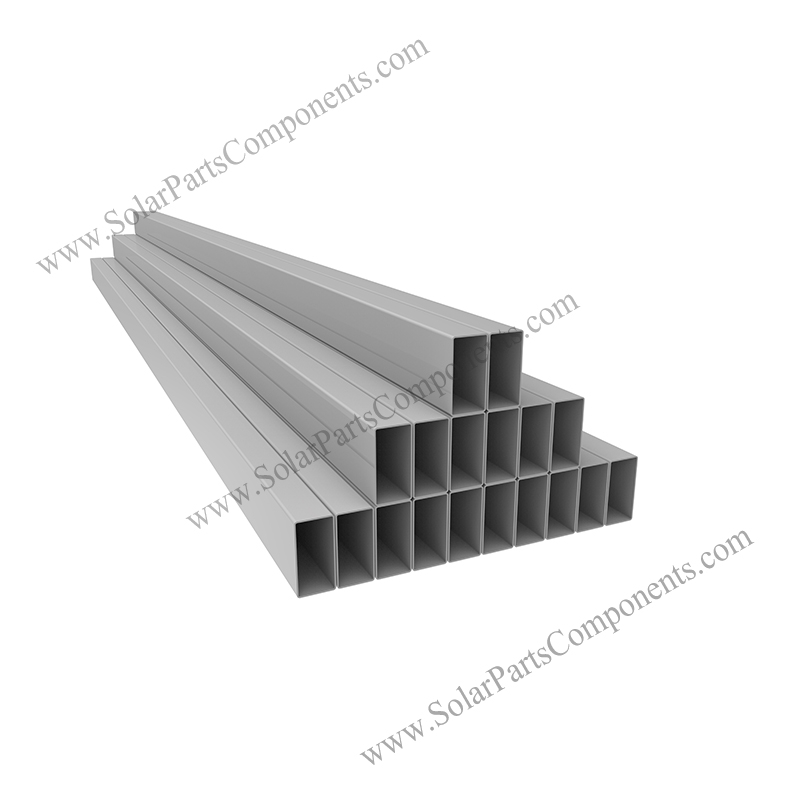
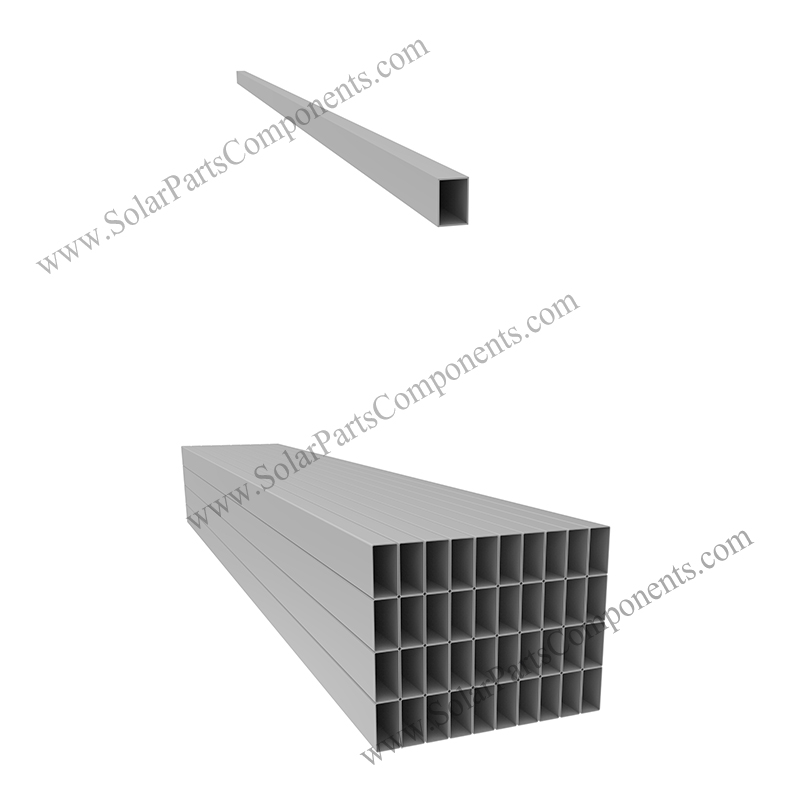
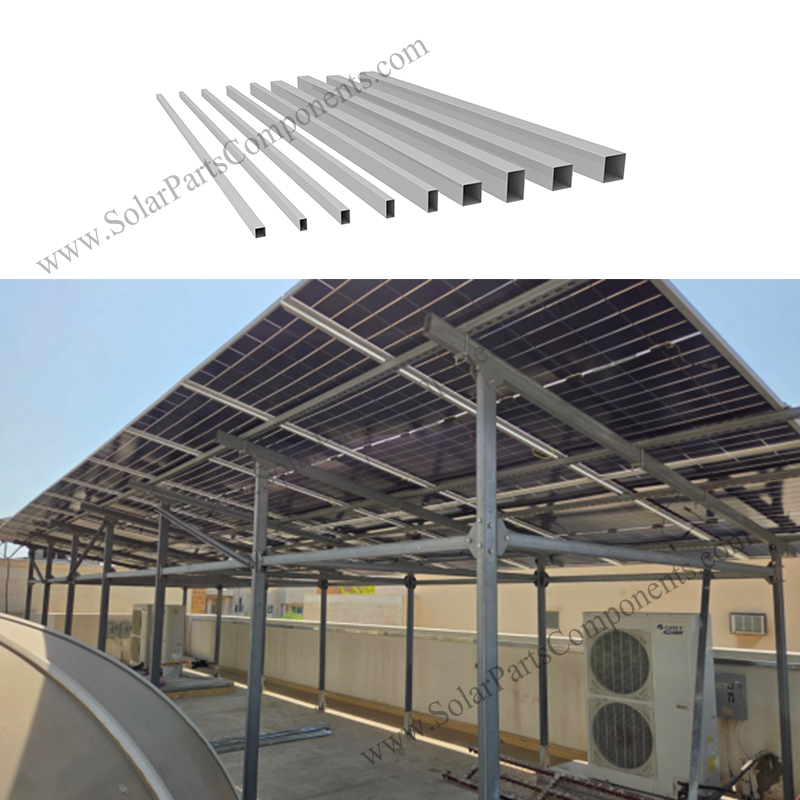
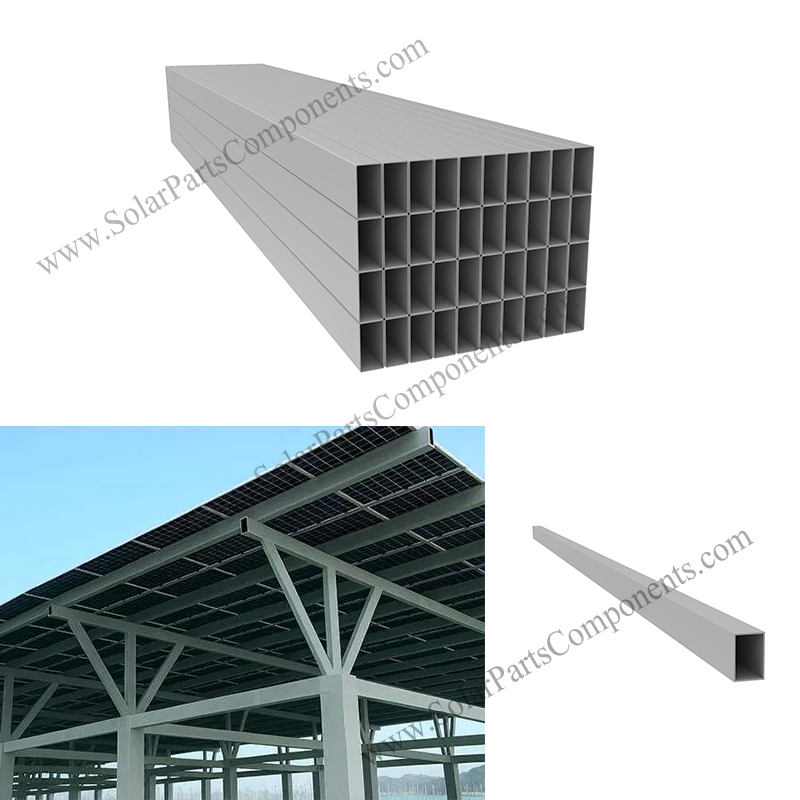
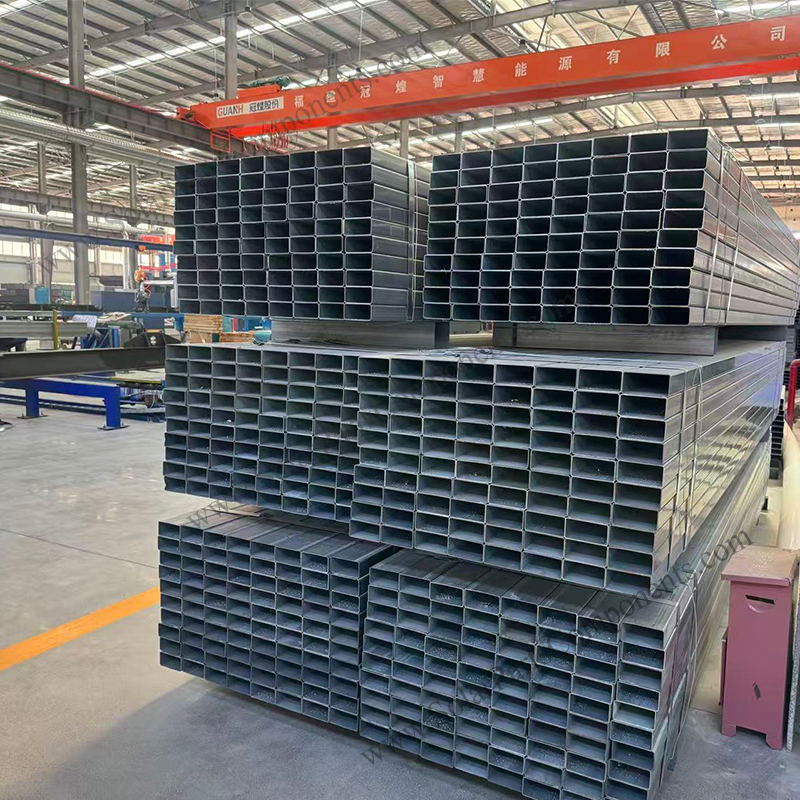
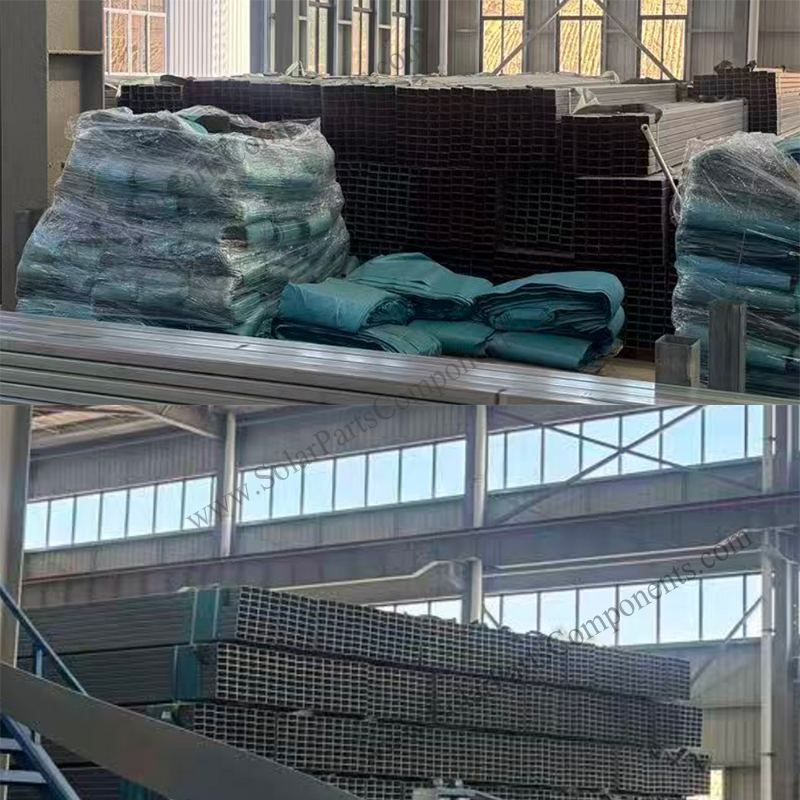
Why Rectangular Steel Tube for Solar Mounting?
The physics is simple: bending resistance comes from steel placed far from the neutral axis. A closed rectangular section keeps its material at the outer fibres, so for the same weight per metre it delivers a higher section modulus than a C channel, Z purlin or equal angle. That is the core reason EPC contractors and distributors keep specifying RHS.
Three further advantages make it the engineering favourite:
-
Doubly symmetric section.
The shear centre coincides with the centroid, so loads applied at the face of the tube do not create the torsional eccentricity that plagues open profiles. C and Z sections twist under load unless restrained — a failure mode you rarely see in RHS.
-
Superior torsional stiffness.
A closed box has far higher polar moment of inertia than an open channel of the same weight. Long purlins under wind uplift or unbalanced snow load experience real torsion; here the rectangular tube behaves dramatically better.
-
Clean, flat surfaces for connections.
Rail brackets, clamps and bolts seat flush against the tube face, which speeds up installation and simplifies structural analysis.